Tuesday, August 23, 2011

Ergonomics for Construction Workers

Construction tasks place the body in numerous risky positions. Cramped working areas, working overhead and at floor level, heavy material handling and repetitive tasks are just some of the risk factors construction workers face. The University of Iowa found that 70 percent of construction workers experienced low-back pain over a one-year period. When working in construction, keep in mind the following strategies. 

Minimize Awkward Postures
Overhead work places static loads on the neck, back and arm muscles. Standing on a stool, ladder, scaffolding or platform can minimize this reach and bring the work into a safer position. Stands or jacks can hold materials in place for overhead installation.

If tasks require work at lower surfaces, sitting on a stool, bucket or the floor can minimize crouching. Knee guards or a padded surface can protect the patella while the worker is kneeling. Knee dollies or kneeling creepers also facilitate easy movement. For forward-leaning tasks, such as floor tiling, a creeper with chest support can be helpful. In addition, workers should plan their work to alternate kneeling with standing in order to stay productive while giving tired muscles a break.

Bar owners have long known that you can stand more comfortably in one place if there is a rail to alternately place your feet. Use a brick or other surface as a lifted foot rest when standing still. Shoe inserts or custom orthotics can also make standing more comfortable.

Digging
When most people shovel, they twist their body in one direction, bend over and then further twist their spine to toss the dirt. To avoid this risk, a long-handled tool can help decrease bending and minimize twisting of the spine. Alternately using the shovel on the left and right side of the body can reduce fatigue and muscle imbalances. In addition, keeping the wheelbarrow close helps to minimize the throwing distance.
Handling Tools
Improper or poorly designed tools place the user in awkward postures leading to tendinitis, carpal tunnel syndrome and strain. They also require excessive force, creating fatigue and pain. While there are numerous ergonomically designed tools on the market now, learn proper wrist positioning using the following key points:

• Avoid handles that end in the palm as they create local contact stress. Add padding or sleeves to lengthen and soften such handles.
• Look for soft or cushioned handles without sharp edges or grooves, which keep the wrists straight.
• While handles with ridges for the fingers seem to aide grip, they actually increase the risk for injury owing to the increased contact stresses.
• The handle diameter for tools such as hammers and screwdrivers should be between 1 ¼-inch and 2 inches. Precision tools require smaller handles of between ¼ inch and ½ inch in diameter. 
• Power tools create less torque than air tools, reducing forces.
• While the hand or knee should never be used as a hammer, it is common in tasks such as laying carpet. Try to avoid this harmful habit.
Organizing Tool Belts
Carrying 20 pounds of imbalanced tools has many negative effects on the spine. Rearrange the tools to balance the load. For example, remove the tools you won’t use during the day to lighten the load. When you take a break, you should remove the belt to give your back a rest.

Belts with wide suspenders help distribute the weight between the hips and shoulders. Bucket-style tool belts are also a good option, as tools can be kept close but not place unnecessary strain on the spine.

Loading Vehicles
Heavy items should be placed close to the tailgate or doors to minimize reaching. Avoid reaching over the side of the truck to lift items. Utilizing truck lockers and bins allows better organization of items and minimizes reaching and crawling into the truck. Roll-out truck beds are also a good investment.

Minimizing the Effect of Vibration
Jackhammers, drills, impact wrenches and other power tools place construction workers at risk for hand-arm vibration syndrome and carpal tunnel syndrome, reduced circulation, paresthesias and pain. Vibration syndromes are often hard to treat, so prevention is important. Anti-vibration gloves, rest breaks and keeping the hands warm are beneficial.  

Whole-body vibration occurs when workers sit in forklifts, cranes and other heavy equipment. Proper maintenance, use of a gel cushion on the seat and releasing hold of controls when not actively using them can help minimize the impact.

Reduce Your Risks
Many construction tasks, from turning a screwdriver to using equipment controls, require repetition. Learn to self-initiate rest breaks and alternate heavy and light tasks. Analyze which tasks you perform routinely to develop a personalized stretching program, counteracting the sustained postures you use on the job. Strengthening muscle groups opposing those you use at work is also vital to preventing future injury.

Ergonomics for Mouse-Intensive Jobs

Workers such as architects, graphic designers, animators and computer-aided design (CAD) users spend countless hours in front of computers barely ever changing position. Does this sound familiar?  If your job keeps you planted at your desk all day consider the following factors to help prevent injuries:

  • Prevent forearm overuse – Find a mouse that fits your hand, and then slide your palm up to rest on the mouse and use your whole arm to move the mouse when possible. If you rest your wrist on the desk for extended periods, consider using a soft gel pad to minimize pressure on the carpal tunnel. The best solution is to invest in a graphic tablet that will allow you to use a digital pen with a more relaxed and neutral position of the fingers, hand, wrist and forearm.
  • Prevent neck pain – You should be able to use your mouse with your elbow at your side and your hand directly in front of you. Try a keyboard that has a separate number pad or one that is on the left of the keyboard, which frees up space on the right for the mouse.
  • Choose a specialty chair – Recently, more chairs have been designed with a pear-shaped back, particularly with mouse-intensive users in mind. This type of chair supports the spine, but frees the scapula to move, encouraging whole-arm use rather than motion only from the wrist.

Treating Sports Injuries

Sports and exercise are important steps to maintaining health. Unfortunately, however, injuries during participation in sports are all too common. Often, these injuries occur in beginners or those who don’t use proper safety equipment or become overzealous about an exercise regimen.
Strains and Sprains

  • An acute twisting or overextension of a joint can lead to tears of muscles and tendons, called “strains,” and tears of ligaments result in “sprains.”
  • In mild injuries, just a few fibers are torn or stretched. Severe injuries, where there is a tear through the full thickness of the structure, frequently require surgical intervention.
  • The intervertebral disc, a ligament between the vertebrae of the spine that works as a shock absorber, can also be torn, resulting in a disc bulge and/or herniation.

Tendinosis

  • In those who are training too much, overuse of a particular joint or joints in the body can result in pain and dysfunction. There injuries are called “overuse syndromes.”
  • A common overuse injury is tendinosis, a condition in which the tendon becomes inflamed from repetitive use.

Stress Fractures

  • Some athletes may experience a stress fracture, which occurs when an abnormal amount of stress is placed on a normal bone, such as in a runner who rapidly increases the amount of mileage, rather than gradually progressing to longer distances.
  • Shin splints are caused by microfractures on the front surface of the tibia (shin bone). This is most often seen in runners, although other athletes can be affected.

Diagnosis and Treatment
Sports injuries are most often diagnosed from the history of the activity which brought on the pain, along with a physical examination. In some cases, X-rays are necessary to rule out a fracture. Fractures require the application of some stabilizing device, such as a cast, after the bone is put back into position. Rarely, surgical intervention is required. Magnetic resonance imaging (MRI) and ultrasound may also be used.
There is a relatively standard treatment protocol for most types of sports injuries, which involves:

  • Rest. Generally no more than 48 hours of rest and/or immobilization is needed, depending on the severity of the injury.
  • Ice or heat can help with pain reduction and tissue healing.
  • Compression of the area may reduce the amount of swelling from the injury.
  • Elevation of the injured arm or leg above the level of the heart is thought to be helpful in reducing swelling.
  • Joint manipulation. Recent research has shown that, in some cases, joint manipulation can help with pain reduction and more rapid recovery.

Prevention
In many cases, sports injuries can be prevented. Proper conditioning, warm-up and cool-down procedures, understanding proper techniques and using appropriate safety equipment can substantially reduce injuries.

Stability Balls

Stability balls, also known as exercise balls, Swiss balls, Physio balls, etc., are a low-cost versatile piece of equipment that can help improve core strength, facilitate flexibility exercises, and add variety to traditional fitness routines.
The exercise ball introduces an element of instability that isn’t available in a floor exercise. The body naturally and automatically responds to this instability by engaging the core muscles, both those in the abdominals and back and in the pelvic floor and hips. Over time, the core muscles strengthen, resulting in better posture, improved balance and enhanced athletic ability.
Choosing a stability ball
It’s important to buy the right size ball and maintain the proper air pressure. The firmer the ball, the more difficult the exercise will be. However, if you are overweight, an older adult, generally deconditioned, or just beginning a fitness routine, you may want to consider using a larger, softer ball. When sitting on the ball, make sure your hips are level—or just slightly higher than the knees.
Basic Exercises
Basic Abdominal Crunch
: Lie on your back with your calves resting on the top of the ball. Curl your upper body, squeezing your abdominals and lifting your shoulders and upper back.
Body Ball Crunch: Lie on the ball with your back supported at the arch. Cross your arms behind your head or across your chest. Keep both feet on the floor. Curl your upper body, squeezing your abdominals and lifting your shoulders and upper back. Return to starting position. Do not pull on your head and neck.

Ball Pushups: Place the front of your knees and shins on the ball and your hands flat on the floor. Look down at the floor and lower your face to within a few inches of it, then push back up to the starting position. Increase the challenge by walking further out so that only your ankles are supported by the ball.

Barefoot Running

Until recently, most of us considered athletic shoes an important and essential part of our athletic training gear. Every year since the mid-1970s, the big running shoe companies have introduced new product lines based on shoes with increased cushion and support. Today, however, there has been an uprising among subgroups of runners, cross-fitness enthusiasts and weight lifters: Less shoe is better, and no shoe is best.
The premise behind barefoot running is essentially that the intrinsic muscles, joints, ligaments and mechanoreceptors of the feet require stimulation to function properly. And this optimal function is inhibited by highly supportive and cushioned shoes.
If you’re interested in trying out barefoot running, consider this advice before you begin.

  • Start with walking barefoot or in minimalist shoes, and gradually work into running.
  • Progress to short runs. Begin running only five minutes per run, and gradually increase.
  • Rather than going totally barefoot, use a minimalist shoe to protect your feet from thorns, glass, nails, stones and other debris.
  • Stop barefoot running at the earliest sign of pain.
  • Avoid running barefoot in freezing temperatures. Shoes protect us from frostbite if nothing else.
  • Be prepared for blisters and calluses to form as you transition to barefoot running.

Osteoporosis: Not Just An Elderly Disease

It used to be that osteoporosis was considered a disease that affected only the elderly. We particularly associated osteoporosis with older women whose backs were slightly hunched over or those who could no longer stand up straight. Today, the truth is that an estimated 20 million American women suffer from osteoporosis, and 80 percent of them don't even know it. 
Osteoporosis is a chronic, progressive condition that steals bone from the body, leading to fractures of the hip, spine and wrist. Older people can suffer disability and even death from osteoporosis-related fractures. Alarmingly, one in two women and one in eight men will suffer from an osteoporosis-related fracture in his or her lifetime. 
Many people confuse osteoporosis with arthritis, and wait for swollen joints and discomfort before being tested. Even though osteoporosis is painless until a bone fracture occurs, it is important to find out how healthy your bones are now and if need be, adjust your lifestyle to avoid this brittle bone disease. The American Chiropractic Association recommends the following tips to maintain healthy bones:

  • Start a regular exercise program. Walking, skipping rope, jogging, playing racquet sports, swimming and aerobics are all helpful in reducing the risk of osteoporosis. Exercising for 20 minutes, three times a week, is helpful.
  • Although weight lifting exercises are generally recommended, the National Osteoporosis Foundation says those suffering from osteoporosis should consult their health care practitioner before beginning a weight lifting program because excessive strain on the bones could result.
  • Those with severe osteoporosis and who have suffered from fractures may find Tai Chi, a form of martial arts, to be a beneficial strength training exercise system.
  • People suffering from osteoporosis should be careful when bending and lifting heavy objects, including grandchildren. Bend from the knees, not the waist, when lifting, and try to avoid hunching while sitting or standing.
  • Be sure to include calcium in your daily diet. The National Institutes of Health's recommendations are 1,000 mg/day for post-menopausal women taking estrogen; 1,500 mg/day for postmenopausal women not taking estrogen, and 1,500 mg/day for men and women over 65 years of age.
  • If you are looking for a calcium supplement, try one that's highly absorbable, such as microcrystalline hydroxyapatite concentrate (MCHC), or one of the malates, fumarates, succinates, glutarates, or citrates. But don't overdo it. Taking more than the recommended amount of calcium may cause kidney stones.
  • Consider taking additional nutritional supplements, such as vitamin D, C, magnesium, zinc and silica after consulting with your doctor of chiropractic.
  • Eat a healthy, balanced diet, including fresh vegetables, fruit, nuts and seeds. Try broccoli, kale, collard greens, cabbage and turnip greens. Experiment with tofu, salmon, sardines and grains. Low-fat milk and/or yogurt are good sources of calcium. (A glass of low-fat milk and a cup of yogurt add 600 mg of calcium to your daily diet.)
  • Drink 8 eight-ounce glasses of water a day (herb teas, juices and coffee are not a substitute for water.) Avoid caffeine, carbonated sodas, alcohol, baked goods and junk food.
  • Watch your animal protein intake.

Chiropractic Care Can Help...
Talk to your doctor of chiropractic about ways to improve the health of your bones. Doctors of chiropractic are licensed and trained to treat patients of all ages and can help people suffering from osteoporosis lead healthier lives.

Thursday, August 18, 2011

Is Your Cellphone Safe?

TYH imageFor the past few years, we have been hearing conflicting reports about cell phone use and potential radiation exposure. Fortunately, the World Health Organization (WHO) has stepped up to set the record straight. Here's what you need to know.

Read More

10 More Better Day Quick Fixes

  1. Drink more water. Proper hydration helps the body function better and aids in the detoxification process, promoting cellular recovery.
  2. breakfastReplace morning coffee with tea. Too much caffeine stresses your adrenal glands, which may lead to overall decreased energy levels.

  3. Eat a good breakfast. Skip the simple carbohydrates like bagels, white breads, and processed foods. Eat fruit and protein.
  4. Eat more bags than barcodes. In general, keep away from processed foods in boxes with barcodes and go with more natural food in bags. Eliminate the unnecessary food additives.
  5. kid readingTake the stairs instead of the elevator. Use your body. Get moving. You burn more calories, helping fat loss. Plus, it is actually a little fun when you see people stare in amazement that you actually use the stairs.
  6. Read more books. Turn off the television and stimulate your mind with a good book.
  7. Be grateful. Take 60 seconds and write down three things you are grateful for in your life. For example: your health, children, spouse, job, family, etc.
  8. Use your third eye. Apply light, sustained pressure for 60 seconds to the point above your nose and between your eyes. This is the "third eye" energy chakra point in acupuncture and is known for revitalizing energy.
  9. stress ballGolf without leaving home. Roll a golf ball on the bottom of both bare feet for 2-3 minutes and release the soft-tissue fascia. You will release tension and increase blood flow as well as stimulate reflexology points.
  10. Squeeze a stress ball for 60 seconds. Strong grip reduces neck tension and upper-back stress. Feel an immediate rush of energy. Make sure you do both hands and maintain breathing patterns.

A Better Way to a Better Day

Day not going right? Stressed from the hectic routine of daily life? Feeling as if your life is spiraling out of control? Oftentimes we get so caught up in simply trying to make it through each day, that we don't take time to appreciate the here and now. Here are some easy ways to improve your day, your health and your life.

Read More

Blueprint for a Balanced Meal

MyPlate, the new portion guide released early this summer, aims to teach healthy eating basics. The government converted the former USDA Food Pyramid to a portioned plate to make following dietary guidelines easier and more user-friendly for Americans. The idea of proper portion control, however, is nothing new. But if the key to healthy eating is so simple, why are two-thirds of Americans overweight or obese?

Our culture has come to be characterized by complete lack of control and confusion. Just as having too many material goods can rob each one of their value, eating too much can erode our ability to derive pleasure and satisfaction from food. Overeating works like a drug in the body: Excess energy intake stresses out your system at every level. If we are to realize our full potential and create a safe environment for our children, we must stop allowing ourselves to be victims of food pushers. We must find a new path to healthy bodies and minds.

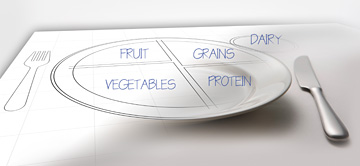
meal blueprintMyPlate reinforces this portion idea that "less is more." It emphasizes balanced serving sizes and visual portion control. Being portion savvy will teach Americans to plate their food in the kitchen, preventing huge portions and second helpings. This naturally causes mindful eating and frees up time for more fun with the family. Let's take a closer look at how this new plate differs from the original food pyramid, which included the four food groups stacked in the shape of a pyramid with the number of recommended servings a person should eat from each group in a day.

Practical Application of the New Guidelines

MyPlate displays sections of fruits, vegetables, grains and protein, with a cup of dairy on the side. Americans have quite a few options within each food section. Some fruit choices are apples, bananas, grapefruit, mangos, pears, pineapples, and watermelon. Vegetables include kale, squash, carrots, potatoes, cucumbers, cabbage, and asparagus. Grains include rolled oats, pastas, pretzels, tortillas, whole-wheat bread, popcorn, and barley. MyPlate lists protein choices as beef, ham, venison, chicken, nuts, cod, and tuna. The glass of dairy focuses on low-fat milk, yogurts and cheeses. (For more information, www.choosemyplate.gov reviews specific examples and features "food galleries.")

MyPlate suggests increasing fruit and veggie intake to fill half your plate, making at least half of your daily grain intake whole grains, and switching to fat-free or low-fat milk. It also recommends limiting intake of sodium-filled soups, breads and frozen foods, and urges Americans to drink water instead of sugary drinks. A few other key items stand out to me:

Since fruit can be high in calories, it's important to watch portion sizes. Berries are a great choice, lowest in calories and full of antioxidants.

MyPlate considers beans as part of both the vegetable and protein portion of the plate. This highlights the fact that vegetarians consume beans as a protein choice, but more Americans should include beans in their diet. For adults, the recommended daily allowance for protein is 0.8-1.0 grams of protein per kilogram of body weight (about 80 grams for a 175-pound person). MyPlate fails to recognize other grains such as lentils, quinoa, brown rice, oatmeal, and bulgur as additional protein sources.

Tuesday, August 9, 2011

Common Conditions Treated by Chiropractic

Even though doctors of chiropractic treat a wide variety of conditions other than the ones listed below, the following conditions are typical of the kinds of conditions that respond favorably to conservative chiropractic care.

Some Conditions Treated
• Spinal Subluxation/Joint Dysfunction
• Headaches, Migraines and Sinus Trouble
• Low & Mid-Back Pain
• Neck Pain, Whiplash, Strain
• Carpal or Tarsal Tunnel Syndrome
• Muscle Spasms
• Extremity Joint Pain & Stiffness
• Pain, Weakness, Tingling, Numbness of Arms or Legs
• Scoliosis
• Tendonitis
• Intervertebral Disc Syndrome
• Bursitis
• Gastrointestinal Syndromes
• Chronic Fatigue and Chronic Fatigue Syndrome
• Allergies
• Thoracic outlet syndrome
• Menstrual Disorders
• Loss of Equilibrium
• Upper Respiratory or Ear Infection
• Colic

Symptoms of Spinal Misalignment

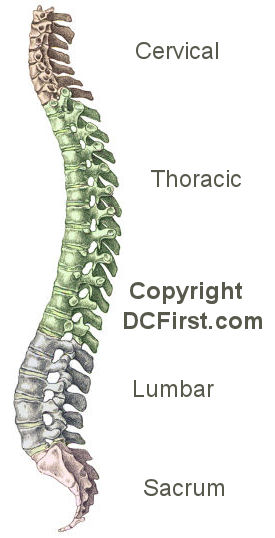
The human spine consist of 24 movable bones called vertebrae. The vertebrae are connected and cushioned by intervertebral disc made of a special type of cartilage. Intervertebral disc provide spacing for the spinal nerves to exit between openings in the posterior joints of the spine. These openings are called intervertebral foramina. The disc along with the posterior joints of each vertebrae are responsible for the flexibility of the spine. Spinal misalignments called subluxations can cause changes in the function of the disc and posterior joints. These changes can alter the shape of the disc and the intervertebral foramina where the delicate spinal nerves exit. The result is irritation to the spinal nerves that send and receive information between the body and the brain. The areas listed below are directly or indirectly controlled by the spinal nerves and may cause malfunction represented by the following effects.

Spinal ColumnThe Cervical Spine consist of 7 vertebrae with spinal nerves traveling to the face, ears, eyes, tongue, sinuses, eustation tubes, vocal cords, pharynx, pituitary gland, thyroid gland, neck muscles and shoulders. Possible effects of malfunction are: headaches, nervousness, insomnia, colds, fatigue, allergies, sinus trouble, runny nose, earache, pain around eyes, acne, pimples, throat conditions, stiff neck and upper arm pain.

The Thoracic Spine consist of 12 vertebrae with spinal nerves traveling to many of the internal organs, the arms, wrist and hands. Possible effects of malfunction are: asthma, cough, pain in lower arms and hands, allergies & heartburn. Conditions affecting the following organs: heart, lungs, gall bladder, liver, kidneys, pancreas, adrenals, small intestines and lymph system.

The Lumbar Spine consist of 5 vertebrae with spinal nerves traveling to the abdomen, large intestines, appendix, sex organs, uterus, bladder, prostate gland, legs, ankles, feet and muscles of the lower back. Possible effects of malfunction are: constipation, colitis, diarrhea, cramps, painful or irregular periods, bed wetting, painful knees, backache, leg cramps, weakness in the legs.

The Sacrum is the base where the spine rest, and is part of the pelvis. Pelvic mis-alignment can cause changes along the entire spine. Connected to the sacrum is the coccyx, commonly called the tailbone. The spinal cord is covered by a thin membrane that attaches to the coccyx. This membrane extends the entire length of the spinal cord and continues to cover the brain. Changes that occur during pregnancy or falls can alter the position of the coccyx, possibly changing the tension on this membrane. Ask your Doctor of Chiropractic about the symptoms listed and many other conditions that could be caused when there are spinal misalignments.

Chiropractic is based on the scientific fact that your body is a self-regulating, self-healing organism. These important functions are controlled by the brain, spinal cord, and all the nerves of the body. The skull protects the delicate tissues of the brain. The moving bones of the spine protect the vulnerable communication pathways of the spinal cord and nerve roots. If the nervous system is impaired, it can cause malfunction of the tissues and organs throughout the body. Doctors call this the Vertebral Subluxation Complex.

Chiropractors work by restoring your own inborn ability to be healthy. When under proper control of your nervous system, all the cells, tissues, and organs of your body are designed to resist disease and ill health. The chiropractic approach to better health is to locate and help remove interferences to your natural state of being healthy. A common interference to the nervous system is the 24 moving bones of the spinal column. A loss of normal motion or position of these bones can irritate or impair the function of the nervous system. With improved spinal function there is often improved nervous function. A Doctor of Chiropractic can help remove interferences that may be impairing normal health. Since the primary focus of your care is improved nervous system function, chiropractic can have a positive effect on many health conditions not normally thought of as "back" problems.

Thursday, August 4, 2011

Three Ways to Avoid Burnout

TYH image1. Cross It Off: Burnout is physical and mental exhaustion, commonly caused by too much work, stress or routine. It also can be a lack of organization that overwhelms you. The solution: make a list of your daily, weekly and monthly priorities, then cross them off your list one by one. Satisfaction of accomplishment and feeling "in control" will keep you motivated for the long term.

2. Change It Up: No matter what we do, life boils down to a series of routines that are both comforting (most of us need routine) and also put us at risk of suffering burnout. Whether it's your same old diet, same old workout or same old month-to-month schedule, mix things up occasionally to stay fresh and invigorated. Try new foods, vary your workouts and plan a few vacations.

3. Give It a Rest: Because burnout is synonymous with exhaustion, the remedy is to take a physical and mental vacation from the norm. Good health is a lifestyle, so pursue it with awareness that you're in it for the long haul. Life is more than 24/7 of dieting, exercising and working excessively. Make time to rest, recover and rejuvenate. Your body (and mind) will thank you for it.

Try This: Greek Goodness

When it comes to yogurt, the health benefits are endless. YogurtTYH image

has everything from probiotics, which help promote healthy digestion, to calcium, which is essential for strong bones.

In the past few years an alternative to regular yogurt has made its way on to the shelves – Greek yogurt. Greek yogurt is another type of yogurt known for having a thick consistency and is packed with just as many health benefits as regular yogurt – some might say even more. Here are some of the primary nutritional differences between the two:

  • Greek yogurt has approximately double the protein of regular yogurt.

  • Greek yogurt has fewer carbohydrates and less sodium than regular yogurt. This could be beneficial to diabetics and those watching their caloric intake.

So try Greek yogurt on its own or in a smoothie. Whether Greek or regular, be sure to choose low-fat or nonfat varieties.

Interval Training: Blast the Fat

TYH imageIn order to lose weight, you need to burn more calories than your body consumes and uses on a daily basis, pure and simple. Exercise is one of the main ways to burn fat calories.

A great way to burn fat and lots of calories is through interval (circuit) training. Interval training breaks up the work with periods of rest. Not only does interval training allow you to improve your fitness quickly; it is also more effective than continuous exercise for burning lots of calories during exercise and increasing your after workout metabolic rate. Here are some fantastic interval training exercises that will help you burn calories and lose weight:

Circuit #1

  • 20 Push-ups

  • 20 Squats

  • 20 Mountain climbers

  • 20 Jumping jacks

Circuit #2

  • 20 (10 per leg) Lunges

  • 20 Siff squat

  • 20 Dips on chair or bench

  • 30-Second run in place/high knees (repeat)

Circuit #3

  • 30 Bench step-ups - alternate legs

  • 30 Push-ups on bench

  • 30 Dips on bench

  • 30 Seconds skip/jog or sprint to a tree (or swings) and back. Repeat four times.

Circuit #4 Obstacle Course (Repeat 3-4 times)

  • Set out 2 cones ( or some sort of markers) about 15 yards apart

  • Run from cone to cone for 30 seconds

  • Take a 5-second break

  • Skip from cone to cone for 30 seconds

  • Take a 5-minute break

  • Shuffle side ways from cone to cone for 30 seconds

  • End with plank hold for 30 seconds

Whichever circuit you pick, repeat the entire set of exercises 3-4 times. Your doctor can give you more information about proper performance of these exercises while helping design an exercise program suitable to your health needs.