Thursday, September 29, 2011

Krazy About Kale

On the hunt for a nutritious, vitamin-packed vegetable that is also loaded with great flavor? Try kale. There are many reasons to pile this cruciferous veggie on your plate. It is low in calories, has zero grams of fat and contains nearly 20 percent of the RDA of dietary fiber, which promotes regular digestion, prevents constipation, lowers blood sugar and curbs overeating.

Need more reasons? Kale also contains the glucosinolate isothiocyanate (ITC), which fights the formation of H. pylori (Helicobacter pylori), a bacteria that can attack the digestive system and cause big problems. Kale is also a superstar in the arena of carotenoids and flavonoids, two powerful antioxidants that protect our cells from free radicals that cause oxidative stress. There are also tons of vitamins in kale – think vitamins C, D, A and K. All boost immunity, help maintain healthy bones and teeth, and maximize overall health. Enjoy!

Sunday, September 18, 2011

Achilles Tendon Injuries

Achilles Tendon Injuries


Achilles tendon injuries are one of the most common overuse injuries in recreational sports. A very small percentage of these injuries are diagnosed and treated by doctors of chiropractic. 
What is especially interesting is that a high percentage of these injuries are caused by a posterior calcaneus subluxation.
The first step in evaluation of an Achilles tendon injury is palpation of the injured area. A ruptured Achilles tendon must first be ruled out. This is done by performing Thompson's Test, which calls for squeezing the calf muscle and checking for the normal plantar flexion of the foot response. If a complete rupture is present, I would recommend a consultation with your orthopedic referral doctor. Most cases of severe rupture will be in the group of males over the age of 40. The majority of non-ruptured tendon injuries will not require surgery if proper conservative care is provided.
Read More:

The Safety of Chiropractic

Controversy.   The Media feeds on it.
Millions of patients love their chiropractor and appreciate our unique and safe approach to recovery from pain. Significant research suggests that chiropractic is the safest approach available for relief from neck pain, back pain, headaches and other “musculo–skeletal” complaints. Lets review that research, and discuss how modern medicine has contributed to the Myth that chiropractic care is dangerous.


Read More:

http://midtown-chiropractor.com.edit.officite.com/blog/post/the-safety-of-chiropractic.html

Manipulation or Microdiskectomy for Sciatica?

FROM:   J Manipulative Physiol Ther. 2010 (Oct);   33 (8):   576–584
Gordon McMorland, DC, Esther Suter, PhD, Steve Casha, MD, PhD, FRCSC, Stephan J. du Plessis, MD, R. John Hurlbert, MD, PhD, FRCSC, FACS

Gordon McMorland, DC, National Spine Care, #300, 301 14th Street N.W., Calgary, AB, Canada T2N 2A1.
gmcmorland@nationalspinecare.com 
OBJECTIVE:   The purpose of this study was to compare the clinical efficacy of spinal manipulation against microdiskectomy in patients with sciatica secondary to lumbar disk herniation (LDH).
METHODS:   One hundred twenty patients presenting through elective referral by primary care physicians to neurosurgical spine surgeons were consecutively screened for symptoms of unilateral lumbar radiculopathy secondary to LDH at L3-4, L4-5, or L5-S1. Forty consecutive consenting patients who met inclusion criteria (patients must have failed at least 3 months of nonoperative management including treatment with analgesics, lifestyle modification, physiotherapy, massage therapy, and/or acupuncture) were randomized to either surgical microdiskectomy or standardized chiropractic spinal manipulation. Crossover to the alternate treatment was allowed after 3 months. 
RESULTS:   Significant improvement in both treatment groups compared to baseline scores over time was observed in all outcome measures. After 1 year, follow-up intent-to-treat analysis did not reveal a difference in outcome based on the original treatment received. However, 3 patients crossed over from surgery to spinal manipulation and failed to gain further improvement. Eight patients crossed from spinal manipulation to surgery and improved to the same degree as their primary surgical counterparts.
CONCLUSIONS:   Sixty percent of patients with sciatica who had failed other medical management benefited from spinal manipulation to the same degree as if they underwent surgical intervention. Of 40% left unsatisfied, subsequent surgical intervention confers excellent outcome. Patients with symptomatic LDH failing medical management should consider spinal manipulation followed by surgery if warranted.

Read More:

http://midtown-chiropractor.com.edit.officite.com/blog/post/manipulation-or-microdiskectomy-for-sciatica-a-prospective-randomized-clinical-study.html

Saturday, September 17, 2011

The Effect of Nutritional Supplements on Osteoarthritis

Osteoarthritis (OA) is the most common form of joint disease and cause of musculoskeletal disability in the elderly. Conventional management of OA primarily focuses on the relief of symptoms, using agents such as analgesics and non-steroidal anti-inflammatory drugs (NSAIDs). These drugs, however, are associated with significant side effects and fail to slow the progression of OA. Several nutritional supplements have been shown to be at least as effective as NSAIDs at relieving the symptoms of OA, and preliminary evidence suggests several of these supplements may have a role in influencing the course of OA. The purpose of this article is to review the available literature on the effectiveness and safety of nutritional supplements for the treatment of OA.


Read More:

http://midtown-chiropractor.com.edit.officite.com/blog/post/the-effect-of-nutritional-supplements-on-osteoarthritis.html

What is Forward Head Posture?

Thanks to AZFamily.com and Erik Dalton, Ph.D. for the use of these pictures!

In the poster on the left, the first sketch (top-left) represents “perfect” head posture. A line dropped from the center of the external auditory meatus (EAM) would land directly in the center of the shoulder (the tip of the acromion process). The graphic on the right demonstrates the progression of forward head posture (occasionally referred to as “anterior head translation”).
According to Kapandji (Physiology of the Joints, Volume III), for every inch your head moves forwards, it gains 10 pounds in weight, as far as the muscles in your upper back and neck are concerned, because they have to work that much harder to keep the head (chin) from dropping onto your chest.   This also forces the suboccipital muscles (they raise the chin) to remain in constant contraction, putting pressure on the 3 Suboccipital nerves.   This nerve compression may cause headaches at the base of the skull. Pressure on the suboccipital nerves can also mimic sinus (frontal) headaches.
Rene Cailliet M.D., famous medical author and former director of the department of physical medicine and rehabilitation at the University of Southern California states:

Head in forward posture can add up to thirty pounds of abnormal leverage on the cervical spine. This can pull the entire spine out of alignment. Forward head posture (FHP) may result in the loss of 30% of vital lung capacity. These breath-related effects are primarily due to the loss of the cervical lordosis, which blocks the action of the hyoid muscles, especially the inferior hyoid responsible for helping lift the first rib during inhalation.”

Persistent forward head posture (a.k.a “hyperkyphotic posture”) puts compressive loads upon the upper thoracic vertebra, and is also associated with the development of Upper Thoracic Hump, which can devolve into Dowager Hump when the vertebra develop compression fractures (anterior wedging).   A recent study found this hyperkyphotic posture was associated with a 1.44 greater rate of mortality
It's not uncommon to observe 2" of anterior head placement in new patients.   Would you be surprised that your neck and shoulders hurt if you had a 20-pound watermelon hanging around your neck?   That's what forward head posture can do to you.   Left uncorrected, FHP will continue to decline.   Chiropractic can be very corrective, especially in the hands of a chiropractic rehabilitationist.   Our specialty is in reversing the joint fixations (what we refer to as “subluxations”) and in re-invigorating the muscles that normally retract the head.

Read More:

www.midtown-chiropractor.com

New Study Reveals That Back Surgery Fails 74% of the Time

Researchers reviewed records from 1,450 patients in the Ohio Bureau of Workers’ Compensation database who had diagnoses of disc degeneration, disc herniation or radiculopathy, a nerve condition that causes tingling and weakness of the limbs. Half of the patients had surgery to fuse two or more vertebrae in hopes of curing low back pain. The other half had no surgery, even though they had comparable diagnoses.
After two years, just 26 percent of those who had surgery had actually returned to work. That’s compared to 67 percent of patients who didn’t have surgery. In what might be the most troubling study finding, researchers determined that there was a 41 percent increase in the use of painkillers, specifically opiates, in those who had surgery.


Read More:

http://midtown-chiropractor.com.edit.officite.com/blog/post/new-study-reveals-that-back-surgery-fails-74-of-the-time.html

Spinal Manipulation Compared with Back School and for Treatment of Low Back Pain

Researchers followed patients with lumbar radiculopathy secondary to disk herniation treated after a diagnosis-based clinical decision rule. A prospective observational cohort study was conducted at a multidisciplinary, integrated clinic that includes chiropractic and physical therapy health care services. Data on 49 consecutive patients were collected at baseline, at the end of conservative, nonsurgical treatment and a mean of 14.5 months after cessation of treatment. Disability was measured using the Bournemouth Disability Questionnaire (BDQ) and pain using the Numerical Rating Scale for pain. Fear beliefs were measured with the Fear-Avoidance Beliefs Questionnaire (FABQ). Patients also self-rated improvement. Mean duration of complaint was 60.5 weeks. Mean self-rated improvement at the end of treatment was 77.5%. Improvement was described as "good" or "excellent" in nearly 90% of patients.

Read More:

http://www.chiro.org/LINKS/ABSTRACTS/Spinal_Manipulation_Compared_with_Back_School.shtml

The Great Faceoff: Chiropractic Goes Head-to-Head With NSAIDs and Acupuncture

The following commentary involves reviewing a brilliant series of 3 consecutive studies, comparing popular forms of treatment for chronic spinal pain, including NSAID use, acupuncture, and spinal adjusting for relief. The author reports that this is the first study of long-term efficacy of 3 distinct and standardized treatment regimens for patients with chronic spinal pain syndromes.

Read More:

http://www.chiro.org/research/ABSTRACTS/The_Great_Faceoff.shtml

What Causes Chronic Neck Pain?

North American Spine Society
            It is usually not possible to know the exact cause of neck pain in the days or weeks after a car accident. We know the muscles and ligaments get strained and are probably inflamed, but they usually heal within six to ten weeks. Pain that lasts longer (than 6-10 weeks) is usually due to deeper problems such as injury to the disc or facet joint, or both.  

Read more here:

http://www.chiro.org/research/ABSTRACTS/What_Causes_Chronic_Neck_Pain.shtml

Soft-Tissue Neck Trauma

The mechanical relationship between the head and neck has been crudely compared to a brick attached to a flexible rod. As the structural mass of the head is so much greater than that of the neck, it is no wonder that injuries of the neck are so prevalent. Even the person with a short neck and well-developed neck muscles and ligaments is not free of potential injury. The viscera of the neck serve as a channel for vital vessels and nerves, the trachea, esophagus, and spinal cord, and as a site for lymph and endocrine glands. When the head is in balance, a line drawn through the nasal spine and the superior border of the external auditory meatus will be perpendicular to the ground.

Read More:

http://www.chiro.org/rc_schafer/Monograph_15.shtml

Joint Trauma

The general stability of synovial joints is established by action of surrounding muscles. Excessive joint stress results in strained muscles and tendons and sprained or ruptured ligaments and capsules. When stress is chronic, degenerative changes occur. The lining of synovial joints is slightly phagocytic, is regenerative if damaged, and secretes synovial fluid that is a nutritive lubricant having bacteriostatic and anticoagulant characteristics. This anticoagulant effect may result in poor callus formation in intra-articular fractures where the fracture line is exposed to synovial fluid. Synovial versus mechanical causes of joint pain are shown in Table 1.

Read More:

http://www.chiro.org/rc_schafer/Monograph_8.shtml

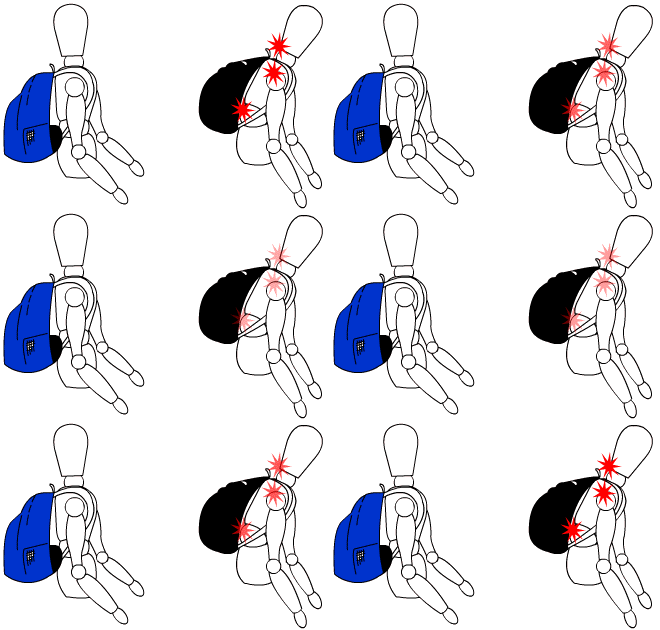
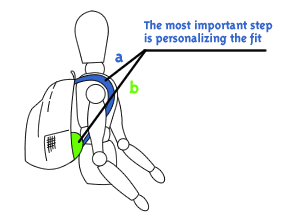
Backpacks and Children


An example of proper and improper spinal loading

Conditions That Respond Well to Chiropractic

Asthma


Attention Deficit Disorder


Autism


Bell’s Palsy


Blindness/Visual Disorders


Blood Pressure


Cancer


Carpal Tunnel Syndrome


Cerebral Palsy


Chronic Neck Pain


Colic


Crohn's Disease


Deafness


Degenerative Joint Disease


Disc Herniation


Epilepsy


Female Issues


Fibromyalgia


Forward Head Posture


Headache


Immune Function


Infertility


Low Back Pain


Multiple Sclerosis


Otitis Media


Parkinson's Disease


Radiculopathy


Repetitive Stress


Scoliosis


Spinal Allignment/Cervical Curve


Stress


Subluxation


Temporomandibular Joint


Visceral Disorders


Vertigo and Balance


Wellness Care


Whiplash

Thursday, September 15, 2011

Eat Healthier When Eating Out

Americans are eating out at an ever-increasing (sometimes daily) rate, and usually paying the health consequences. It's tough enough finding healthy food when grocery shopping these days, but put your trust in the hands of a burger joint, a diner, a pizza parlor or the vast majority of other restaurants and you're generally asking for trouble. Here are five substitutions to infuse a little more health into your next dining experience away from home.

4 Vitamins You Can't Do Without

Vitamin A plays an important role in vision, bone growth, reproduction, and cell division. Adequate amounts of vitamin A help to regulate the immune system and protect against infections by producing the white blood cells that destroy harmful bacteria and viruses. Dietary sources: Carrots, sweet potatoes, pumpkin, eggs, milk.

Vitamin C: As you probably already know, a daily dose of vitamin C is one of your easiest and most effective weapons against illness. Vitamin C's profound ability to protect cells from free radical damage can help lower your risk of various diseases and conditions, while improving iron absorption to promote healthy blood cells.Dietary sources: Fruits and vegetables, particularly cantaloupe, citrus fruits, berries, broccoli, green and red peppers, tomatoes and winter squash.

TYH imageVitamin D is actually a hormone the body creates naturally from diet and sunlight. It is vital for maintaining a strong immune system, regulating inflammation, assisting in calcium absorption, and decreasing the risk of chronic diseases. Since vitamin D promotes calcium absorption and enables normal mineralization of bone, it is needed for healthy bone growth and remodeling. Without sufficient vitamin D, bones can become thin, brittle or misshapen. Dietary sources: Fatty fish, cheese, egg yolks, fortified foods.

Vitamin E helps to prevent blockages in the coronary arteries. Additionally, vitamin E acts as a powerful antioxidant and anti-inflammatory agent to protect the liver, which can metabolize and excrete some forms of vitamin E. Antioxidants such as vitamin E effectively protect cells from free-radical damage, which contribute to the development of cardiovascular disease and other serious health conditions. Dietary sources: Nuts, seeds, vegetables oils (soybean, canola, etc.), green leafy vegetables.

Remember to talk to your health care provider if you are considering taking any of these vitamins as supplements so they can recommend an appropriate dosage.

Tuesday, September 13, 2011

Tennis Elbow Treatment

Tennis elbow and chiropractors are a natural fit.  Tennis elbow usually refers to pain in the outer part of the elbow and the upper part of the forearm.  This pain is caused by inflammation of the tendon when it rubs against the bony protuberance at the outer part of the elbow.  The adjustments done by the chiropractor can realign the entire body and reduce pressure on the elbow ligaments.

The most common symptoms of tennis elbow include pain over the outside elbow, which can also radiate up or down the arm, wrist weakness, tenderness over the outside of the elbow, and difficulty extending the forearm.  pain when lifting or bending the arm may also be a sign of a ligament problem, along with pain when gripping or carrying an object.  The pain from tennis elbow generally lasts for about 6 to 12 weeks, but can also persist for years if the problem is not corrected by a chiropractor.

Tennis elbow is considered an overuse injury, caused by repetitive, forceful movements of the wrist.  This forces the thumb to move outwards and the palm to move upwards, which shortens the muscles of the forearm.  The point of attachment at the outer part of the elbow then becomes strained and any sudden movements may cause the tendon to tear.  Despite the name, only about five percent of tennis elbow patients actually play racquet sports.  Any repetitive motion can cause the injury, including gardening or typing.

Chiropractors will recommend certain treatment measures to relieve tennis elbow.  The most important is to completely rest the elbow and ice it down to reduce the inflammation.  An elbow brace or strap may be required if the problem continues and total rest is impossible.  Your chiropractor can examine the problem and locate any problems with the function of the elbow and muscles of the forearm or wrist.  A misalignment in the shoulders, neck, or back may lead to compensation injuries in the arms and elbows, so these adjustments may be enough to fix the problem for some people.

It is also crucial to increase the blood circulation to the elbow and forearm area.  The chiropractor can do this by alternating hot and cold packs while massaging the muscles to relieve tension.  Once the pain has subsided, a comprehensive rehabilitation and physical therapy program should be followed to regain strength and range of motion in the elbow and forearm.

Friday, September 2, 2011

Jump-Start Your Next Workout

Has your workout program been in a downward spiral lately? Have you been doing less and less physical activity? Are the once pain-free activities now causing increased pain? If so, you might want to resume your workouts with isometric exercise. Find out more about isometric exercises and beginner exercises to get you started with chiropractic care at our office located in Midtown Manhattan, NY.

Eat Less Salt!

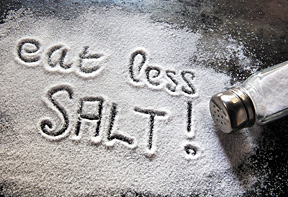
The fast- and processed-food industries offer a staggering variety of sodium-laden foods, many of which make a huge dent in your recommended daily allowance for sodium in a single serving. Example: Look closely at canned soup labels; many soups contain 2,000 mg or more of sodium per can – more than 80 percent of your RDA (currently 2,400 mg for adults under age 51 and 1,500 for those over age 51 or suffering from high blood pressure, diabetes or kidney disease.)

Sodium Gone Wild

Sodium plays an important role in the body in the proper amounts – it helps maintain fluid balance, transmit nerve impulses, and influence muscle contraction and relaxation – but too much can be a big problem. Sodium attracts and retains water; too much sodium will accumulate in the blood, increasing blood volume. The heart has to work harder to pump that blood, increasing arterial pressure. Chronic fluid retention and increased blood pressure can lead toheart disease, stroke and congestive heart failure.

Within reason, your kidneys can handle too little or too much sodium; if the body isn't getting enough (which is rare), the kidneys hold on to sodium; if it's getting too much, the kidneys excrete the excess through the urine. The problem is that the average American consumes so much sodium on a daily basis (3,400 mg on average, or 1,000 mg more than the RDA) that the kidneys can't always eliminate enough.

The Potassium Connection
SaltPotassium and sodium work together in the body to maintain cellular fluid balance. Cells actually have a sodium-potassium "pump" that helps facilitate this balance; by pumping sodium ions out of the cell in exchange for potassium ions, sodium is removed from the cell. As mentioned, sodium attracts water; if sodium stayed within the cell, it would effectively explode from the inward diffusion of water.

Because sodium and potassium have this vital balancing function on a cellular level, getting the right amounts of both in your diet is equally vital. That means limiting your sodium intake while ensuring you don't ignore potassium. The RDA for potassium is currently 4,700 mg; ideal food sources include bananas, citrus juices, avocados, cantaloupes, tomatoes, potatoes and lima beans. (A medium banana provides in the neighborhood of 450 mg of potassium.)

Many foods contain potassium (particularly plant-based foods), but in today's culture, you can see why people are struggling to meet their RDA for potassium and far exceeding it when it comes to sodium. The solution: Be a smart shopper. Evaluate the sodium content in your favorite foods and make wise decisions that ensure you come in at or under your daily requirement for sodium, not way above it. Talk to your doctor to learn more.

Five Daily Anti-Aging Tips:

Five Daily Anti-Aging Tipsold men surfing

Hydration is important for cellular functioning, so make sure you drink liquids regularly throughout the day. The phytonutrients in plant-based foods are essential for health and wellness. Eat plenty of vegetables and low-sugar fruits every day. Rest is necessary for your body to run optimally. The way to figure out how much sleep you need is to think about how much you sleep on a relaxing vacation, when you fall asleep naturally and wake up without an alarm. The number of hours you get on a relaxing vacation per day is generally how much time your body is craving for sleep. Take time to have fun with your loved ones. Social support and positive experiences have been seen in studies to be beneficial to health. Make sure to keep your body moving every day, even if it's just walking up and down stairs at work or taking a noon-time stroll around the block. Exercise is key to living a long and healthy life!

Find Your Fountain of Youth

History shows us that people will go to great lengths to search for ways to remain young. The literal and figurative quest for the elusive "Fountain of Youth" is alive and well to this day.

While there is no way (at least yet) to "live forever," the process of searching has helped us to learn more about the multitude of factors that seem to allow for longevity and lifelong health. Here are some easy ways to find your own Fountain of Youth and live a healthier, happier life.

The Right Attitude

Within populations of people whose longevity seems to be more common, a natural curiosity and optimism (one that is usually more common only in children) appears to be more prevalent. It may be that a positive outlook does indeed promote positive outcomes, in that people who have a propensity toward optimism and excitement about basic aspects of life (as children do) may experience less physiological stress and thus be healthier. We know psychophysiological stressors can do great harm to the body over time. It makes sense that positive perceptions and lifestyle changes which promote lower levels of psychophysiological stress would be beneficial.

The Right Fuel

woman on rockAside from cognitive and lifestyle changes, we also know from studies that consuming an anti-inflammatory diet which is more plant-based is beneficial in slowing the progression of aging. Even with our skin, anti-inflammatory diets and foods tend to slow down aging of the skin. So, when we eat an anti-inflammatory diet, we are essentially promoting youth from the inside out. Since disease progression and aging have a lot to do with chronic inflammation in our body, when we eat foods that help to decrease the inflammatory chemicals in our body, we are essentially able to use foods as anti-aging medicine. In general, the main points to keep in mind when trying to eat more anti-inflammatory foods are to cut back on fatty, sugary, processed foods while increasing consumption of foods that are natural, organic and unprocessed.

The Right Schedule

Are you are prepared to make the above changes to achieve "eternal youth"? Well, there is just one more thing you should keep in mind: The human body is a machine. If you are going to keep it well-tuned with premium oil from your anti-inflammatory foods, you should also remember that all machines need time to rest and cool off. So please allow yourself time to rest every day, multiple times per day. This goes back to the idea of decreasing stress on the body because stress ages the body. It is imperative to make sleep a priority in your life, and to incorporate relaxation time into your busy schedule. The busier you are, the more you need it - even if it's just a few minutes here and there throughout the day. Just like you would never drive your car across the country without stopping, you shouldn't expect your body to be running constantly without intentional periods of rest.

Pablo Picasso once said, "Youth has no age." It is in our ability to create youthful qualities in ourselves that keeps us ageless. The knowledge of the ingredients necessary for longevity and health, as well as the discipline to implement them, is the anti-aging map we should all be looking for. Do not allow your numerical age to dictate your level of youthfulness. When we are able to hold on to the positive outlook of our younger years, consume the foods we know we should based on the wisdom that comes with our aging, and imitate the slower pace of our elders, that's when we are finally able to discover our own version of the Fountain of Youth.